5 Trends That Will Shape Your Success in 2026
Running a small or midsize service business is getting more complex every year. 2026 is shaping up to be the year where leaders need to balance technological advancements and personalized, human touches in order to meet their customers’ growing expectations for service.
According to the U.S. Chamber of Commerce, 95% of small businesses already use at least one technology platform. And despite tighter budgets and smaller teams, Salesforce reports that 76% of small and midsize business (SMBs) are increasing their tech spend because they know they can’t meet rising customer expectations without it.
Small service businesses may feel this pressure more acutely. Even with a team of hardworking, dedicated employees, there are only so many hours one person can squeeze into a day. Especially if you’re encouraging reasonable working hours and a healthy work life balance.
Automation, integrated systems, and the thoughtful use of AI can help you keep pace without stretching people past their limits.
At the same time, no one wants a business that feels robotic, impersonal, or stitched together by half-baked automations that lack oversight. Customers expect efficiency, but they also want to see a human guiding the work, thoughtfully answering their questions, and delivering the high-quality service(s) they paid you for.
So the question becomes: How can small service businesses adopt new technology in 2026 without losing the high-touch customer experience that sets them apart?
Here are the trends that showed up consistently across the most reputable 2026 trends forecasts, combined with what I’ve learned from helping businesses build operations that are modern, efficient, and genuinely supportive of the people doing the work.
Trend 1: AI Is Everywhere
AI adoption is no longer an idea for the future but fully mainstream across businesses of all sizes.
According to McKinsey & Co, in 2025, 88% of companies reported using AI in at least one function, up from 78% in 2024.
According to Salesforce, 75% of SMBs are investing in AI, and 91% of SMBs using AI are reporting increased revenue.
Businesses love AI because it can automate manual or repetitive tasks, draft content or communications, turn recorded meetings into recap emails with action items, analyze data, create SOPs and templates, help small teams deliver more work at a steady, manageable pace, and so much more.
The challenge is no longer “should we use AI” but “how should your team use AI” in a transparent, consistent, secure way.
Using generic prompts and letting employees experiment with free tools could lead to inconsistent work and potential quality risks.
In the same way that you document processes on other tools, you need to ensure your team has guidelines and policies in place to provide guardrails on when and how they support your customers with these tools. This may include which tasks are appropriate for your AI tools, how to draft prompts and review outputs, and which tools are secure enough to use with customer data.
If you want help with this, send me a message. I’ve got a policy template you can use to get started!
In 2026, your competitive advantage will come from carefully choosing which AI platforms to integrate into your workflows, building out basic data security and utilization policies for approved AI tools, and training your employees on how to write thoughtful prompts or effectively use the technologies you implement.
Trend 2: Smart, Integrated Tech Stacks
Growing SMBs are spending more and more on consolidating and integrating their tech stack. Gone are the days of using 5 different tools to complete one workflow.
According to Salesforce, those same companies rely heavily on CRM, automation, and AI-backed tools to streamline operations and customer experience.
This is especially true for B2B service companies where the customer may need to interact across several of your departments or employees. When it isn’t just your internal employees being slowed down because of a disjointed tech stack, that becomes a much bigger issue.
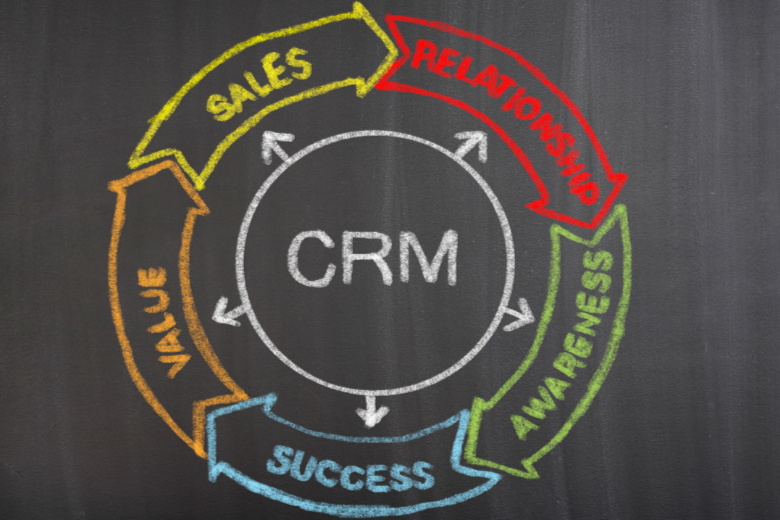
If you are juggling disconnected tools, you could be wasting time, duplicating efforts across functions, disconnecting the flow of customer data from sales to customer service, and losing out on customer utilization and marketing engagement data that could be generated from the synchronization of those tools.
It’s no secret that clean, centralized data unlocks better forecasting, more accurate proposals, and more personalized service. But the issue is rarely knowing this is a problem; it’s identifying when and how to make a change to a centralized CRM or data source.
2026 will be the year to simplify if you can. Consider leveraging an onboarding professional (HubSpot has several partner companies) or a fractional consultant to support with this project so you can remain focused on growing your business.
A simple, integrated tech stack will help you move faster, thereby generating more revenue and a more positive customer experience. You just need to find the right partner to help you get there.
If you’d like to work with me, I can support with tech stack reviews, simple HubSpot implementations, process creation and documentation with your new tools, or even identifying the best tech partner for you.
Trend 3: The Human Touch Is Still Your Competitive Edge
Customer Experience reports show that a personalized experience, often powered by AI, is becoming one of the main differentiators in business.
Statista reports that 70% of customers expect a response to an email or voicemail the same day it is received.
Upwork and Salesforce both stress hyper-personalization and customer satisfaction as central to SMB growth.
More than 50% of customers spend less or stop buying from you altogether after they’ve had a poor experience with your business.
We already know that in 2026, growing SMBs are going to need to invest in their customer’s experience and the tools needed to support it.
However, workplaces are beginning to realize that though AI may boost response times and personalization, human skills such as empathy, communication, and leadership are more valuable in building long-term customer satisfaction and decreasing churn.
Everyone is talking about AI as the differentiator, but the real advantage will come from how well your team knows how to use it for:
Clearer communication
Faster, friendlier support
More personalized service
Fewer handoff gaps
Better follow-through
Consistent quality
More robust customer experiences lead to stronger renewals and more referrals, which are the backbone of any business’ service-based growth.

You can strike this balance by having your real employees use analytics, customer feedback, and engagement data generated by AI to anticipate your customer’s specific needs and craft bespoke solutions.
You can also empower your team to support clients live — on the phone or on-camera — rather than relying on email alone, send hand-written notes for personal milestones (birthdays, babies, promotions), and deliver that empathetic, human experience when it matters most (incidents, claims, kudos, etc.)
It is going to be the authentic touches, which cannot be replicated by AI, that will really set you apart in the new year. But your tools can help you remember to do those things and give you the intelligence needed to do them well.
Trend 4: Teams Need New Skills
In-demand skills are shifting fast. Professional services and SMB research both show significant disruption as AI becomes part of everyday work.
World Economic Forum data highlights that the most valuable professionals moving forward are the ones who pair niche expertise with strong collaboration skills and comfort with modern technology.
Many SMB leaders feel both excited and a little overwhelmed by the pace of change. You’re not alone if you feel the pressure to keep up.
In 2026, when you’re hiring or expanding your team, it will be important to look for people who can support clients live, work confidently with AI and modern platforms, and collaborate well in hybrid or flexible environments.

If you already have a strong team, the best thing you can do is support them with upskilling. Training on AI tools, CRMs, automation, or data basics helps your employees grow with the business instead of being left behind. This kind of development also increases retention, especially for your top performers.
When teams don’t have support to adapt, it can slow the business down. Thankfully, this is something you can easily prevent. You can learn the systems yourself or bring in a consultant who can train your team, optimize your tools, and help your people adopt new ways of working without feeling overwhelmed.
Fractional or freelance experts can also help fill short-term skill gaps and guide your existing team as you prepare for new systems.
Trend 5: Pricing And Service Models Shift From Hours To Value
Professional services firms are beginning to move away from billable hours to subscription or outcome-based models now that AI is consolidating work timelines and levels of effort.
Since AI can shorten the time required to complete certain deliverables, time-based pricing is becoming harder to justify.
B2B trends show that businesses are viewing the customer lifecycle more holistically, which supports value-oriented models over time-based rates and will lead to these models becoming standard rather than an alternative in 2026.
Moving forward, your customers are going to care more about the quality of outcomes and reliability of your services than about how many hours you spent generating those results.
If you keep pricing by the hour while using AI to speed work, you risk either undercharging or confusing clients who see turnaround times drop.
As you begin to prepare for renewals in 2026, consider modifying agreements to subscription models, fixed fee packages, retainers with defined outcomes, and lightly managed services packages that do not depend on hours worked. Even small packaging and pricing adjustments can help your business better reflect the value you provide.
Most SMBs Are More Ready Than They Think
If you’re already consolidating your tech stack, piloting AI tools, or investing in skill development, you’re already on a path to success for 2026.
If you’re not there yet, that’s okay.
Small and midsize service businesses have natural advantages when looking to improve: fewer layers of approval, faster decision-making, closer proximity to clients, simpler budgets, and flexible team structures.
You don’t need a massive transformation to prepare for 2026. You just need a thoughtful plan with a few small, achievable steps.
Consider implementing a simple 90-day action plan:
Pick one AI tool and standardize it
Audit your tech stack and remove or integrate one tool
Clean up one part of your CRM or client data file
Identify one skill gap and support it with training or fractional help
Improve one high-impact customer experience touchpoint
If you want help building a clear, people-centered operations plan for 2026 that balances AI utilization with your employees’ standout service, let me know.
At Streamline Strategies, I help businesses align their people, processes, and platforms so they can grow sustainably and serve their clients with confidence.
If you’d like ongoing support, here are a few ways to stay connected:
About the Author
Tiffany Dougherty is the Founder and Principal Consultant of Streamline Strategies, LLC. She draws on more than 13 years of leadership experience in strategic operations and customer success to help B2B service companies scale sustainably with people-centric operations.